Architecture becomes truly timeless only when it grows out of the landscape itself.
Villa in Lykorema, Marmari, Evia
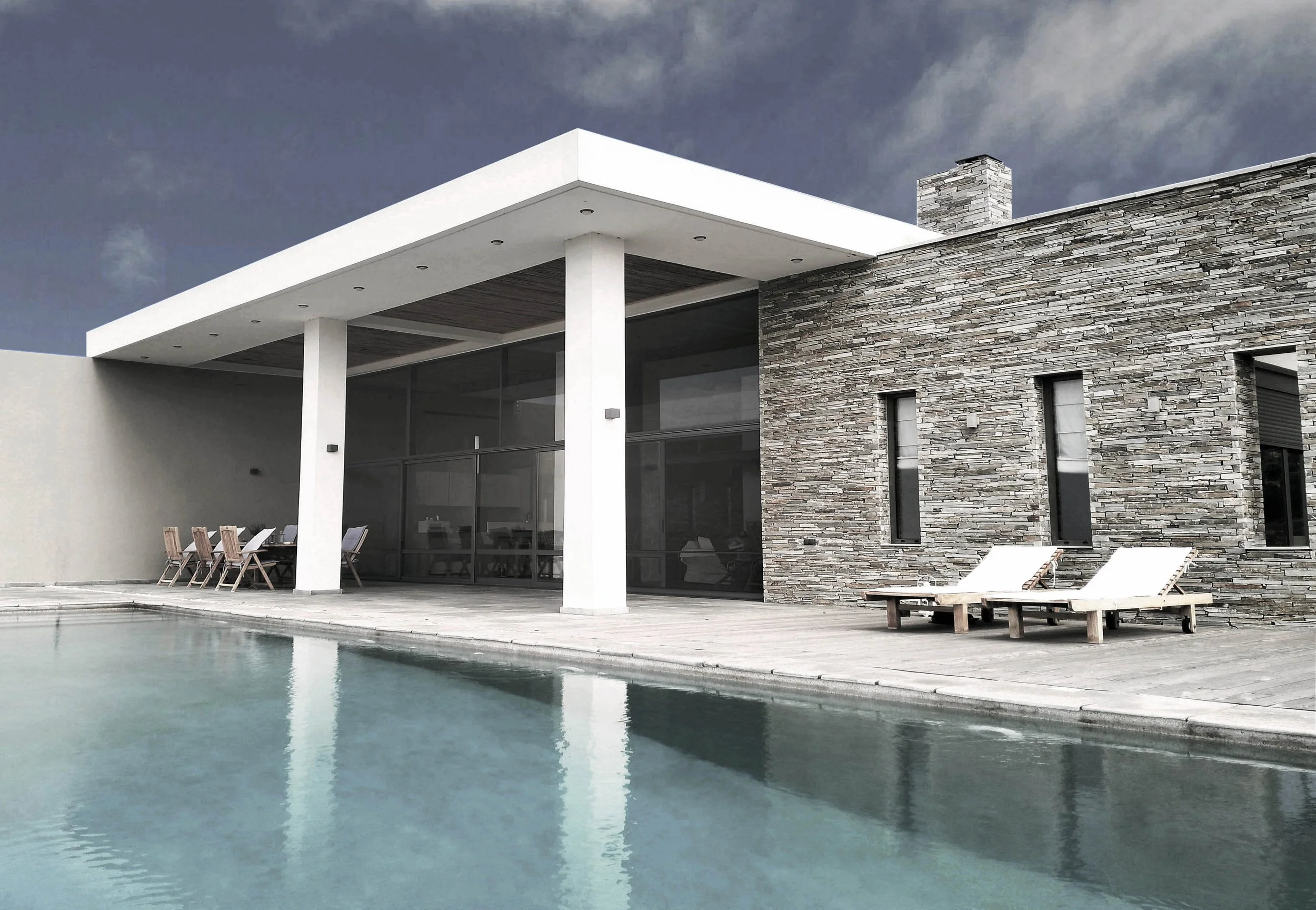
The residence in Lykorema, Marmari, Evia was designed with a primary focus on achieving seamless integration with the area’s rugged natural topography. The architectural composition is structured to respect the scale of the landscape while leveraging the site’s inherent qualities—orientation, light, natural ventilation, and views.
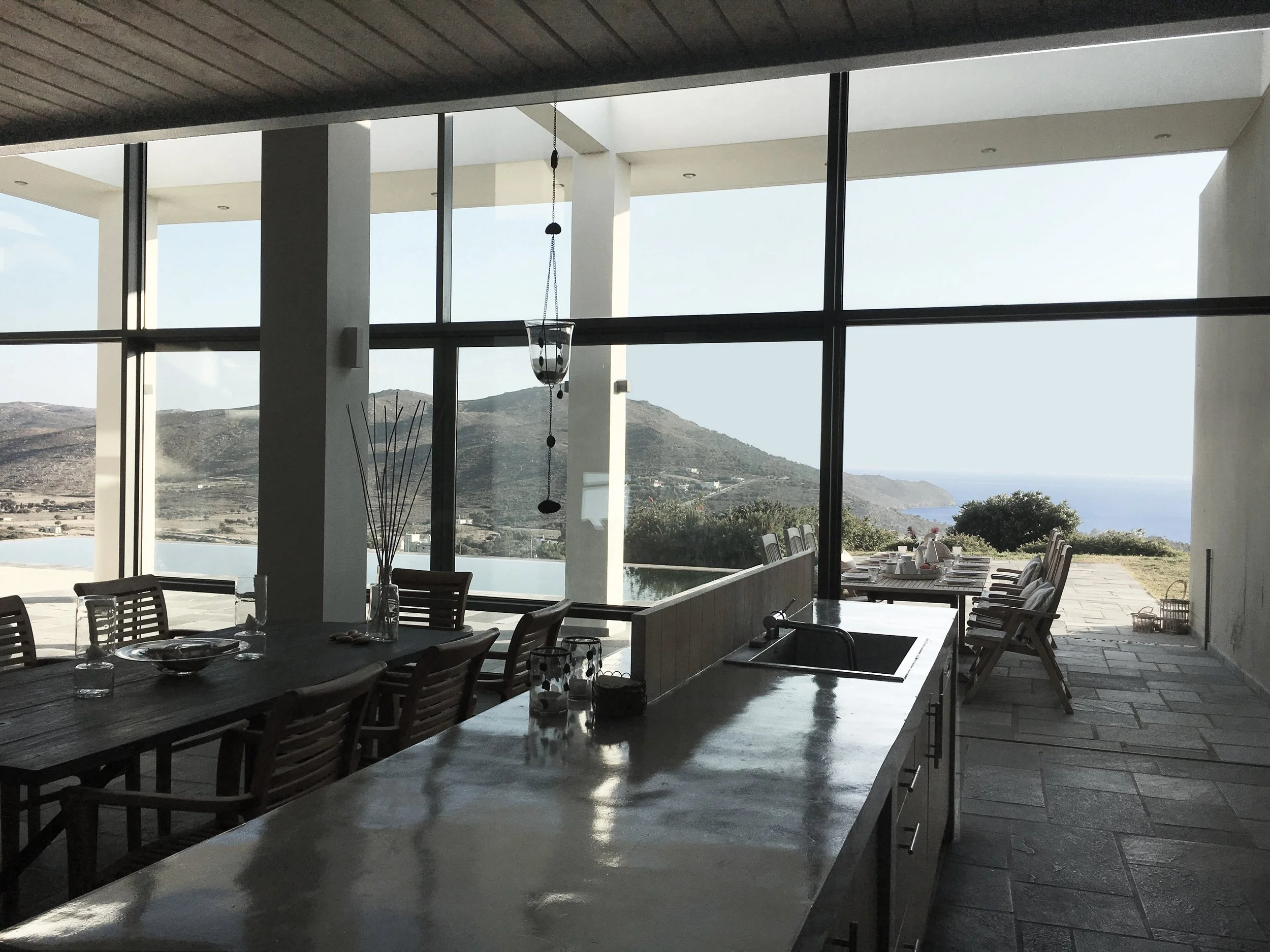
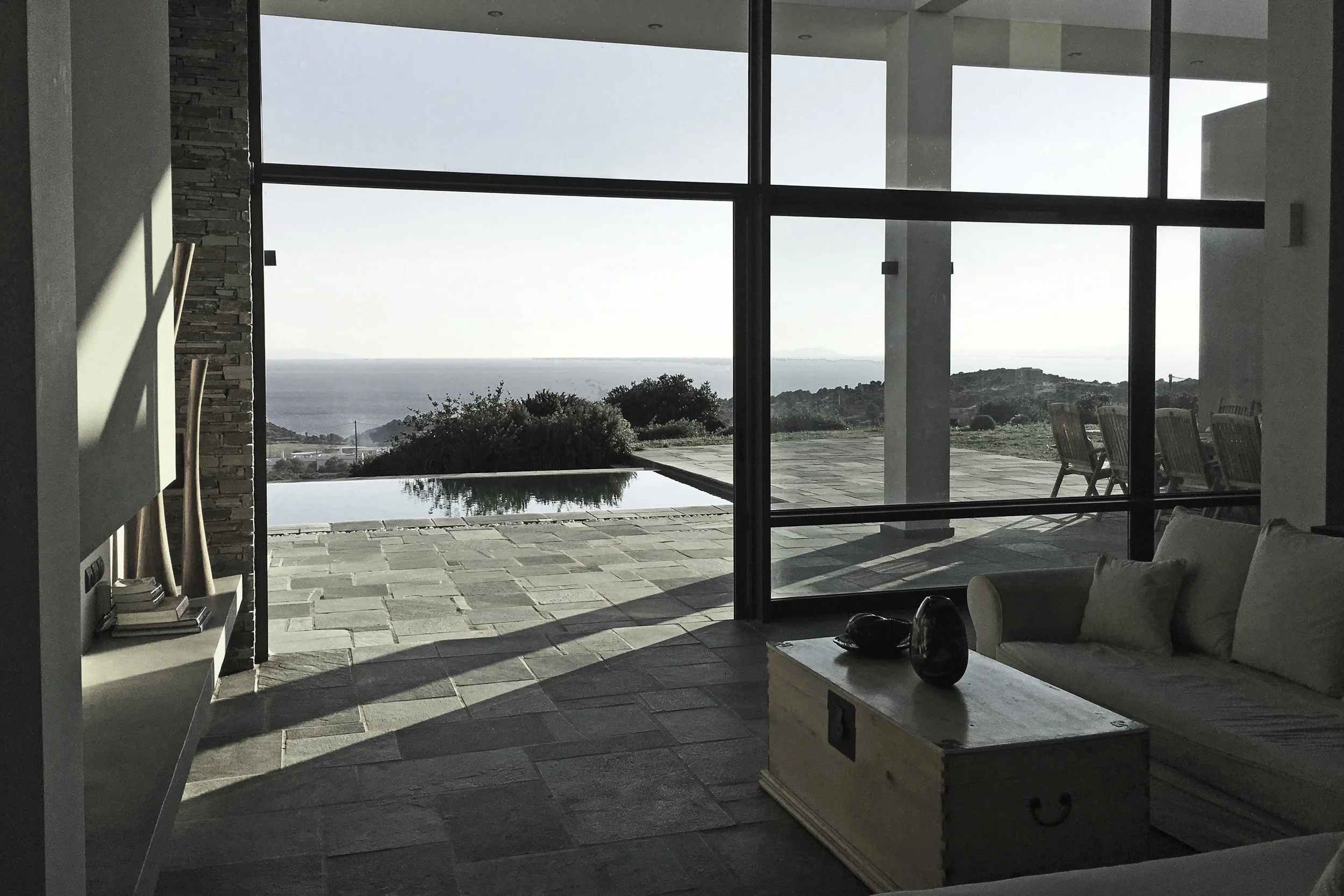
The main volume of the villa unfolds linearly, following the terrain and allowing the programmatic functions to step naturally along the existing elevation changes. This spatial organization maximizes the panoramic view toward the South Euboean Gulf, while creating controlled shading and protected outdoor voids suitable for use throughout the day.
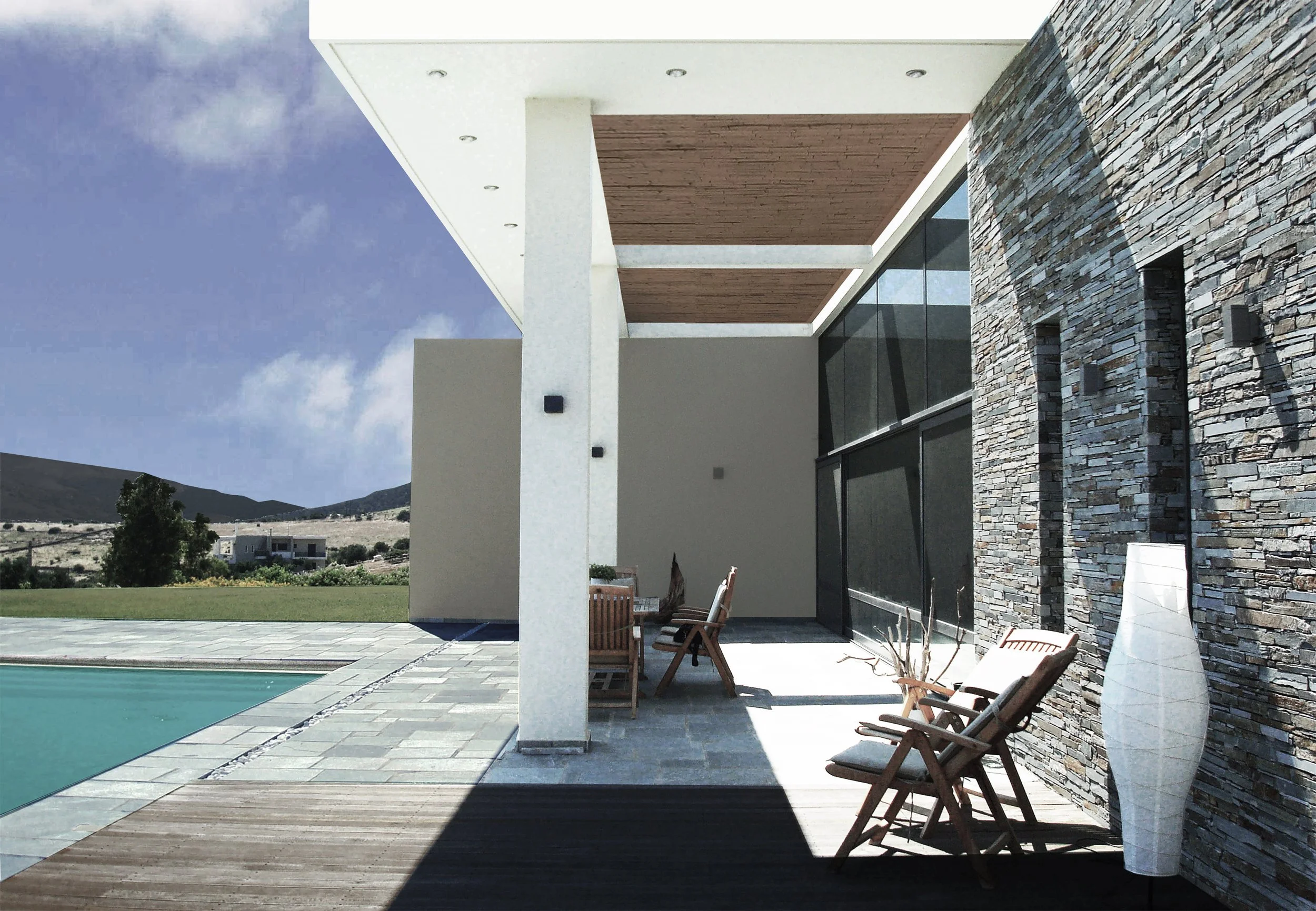
Materiality lies at the core of the design approach. Locally sourced stone, combined with exposed concrete and timber elements, establishes a tactile language directly connected to the surrounding environment. The stone anchors the building to the ground, while the concrete introduces clarity of form and structural precision. The materials are not employed decoratively, but as an extension of the landscape itself, reinforcing the sense that the building emerges organically from its site.
The facade openings are strategically positioned, with large linear frames that strengthen the visual continuity between interior and exterior. Their scale and placement were informed by detailed analysis of sunlight, shading, and local wind patterns, ensuring natural cooling, optimal daylighting, and reduced thermal load.
The outdoor configuration follows the same principle of integration. A sequence of terraced levels, embedded in the existing slopes, hosts sitting areas, walkways, and shaded pockets that operate as natural extensions of the interior spaces. The landscape design avoids artificial interventions and instead highlights native vegetation and the raw character of the terrain.
The villa in Lykorema represents an exercise in inhabiting the landscape: a contemporary structure that applies principles of sustainable design, local materiality, and site-specific geometry to achieve a refined balance between functionality, structural clarity, and environmental integration.